

Interview: Luke Owen / Death Is Not the End
In conversation with: Leon / Mafiatone
In November 2023, at one of the late Mixman’s Dub School sessions in Bedford, Luke Owen witnessed something increasingly rare. Mafiatone wasn’t simply selecting records or pulling exclusive dubplates from a box: original master tapes were being played as part of the session.
For a culture in which dubplates have long functioned as documents of a sound’s identity, history and connections, seeing the tapes themselves introduces another dimension. These are objects that sit closer to the source: recordings and mixes carried back from Jamaican studios during the formative period of dub and sound system culture in Britain.
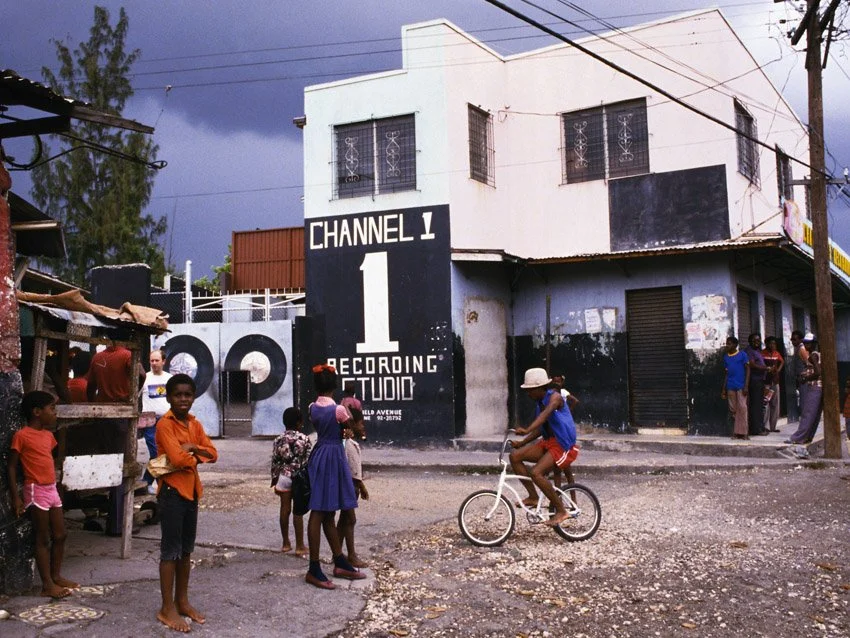
Behind them is the story of Stafford Douglas, founder of Jah Mafiatone HiFi, a figure whose activities connected Birmingham sound system culture directly with studios including King Tubby’s and Channel One in Kingston. Beginning in the early 1970s, Mafiatone developed into a sound, a production operation and eventually a series of record labels.
Here, Luke Owen speaks with Leon of Mafiatone about Stafford Douglas, the origins of the sound, travelling with Mafia as a teenager, nights in Jamaican studios, the significance of retaining two-track master tapes, and keeping the original Mafiatone sound alive today.
Luke: I went to see you play in Bedford a few years ago. It was at one of the now late Mixman’s Dub School events.
Mafiatone: Right. That would have been November the 17th, 2023.
Luke: Yes. I was very captivated by your delivery and the fact that you were playing the master tapes themselves live. Obviously, it’s quite a common thing to see somebody play dubplates in that context, but to see the master tape there gives a deeper sense of the history of the sound.
I guess first of all, could you give us a quick bit of background in terms of Stafford Douglas, the history of Mafiatone, and how you are continuing on with the works?
Mafiatone: Well, the late Stafford Douglas was the original founder of the sound, Jah Mafiatone HiFi — that was the full name that the sound went by.
It originally started out in Brixton Hill, London, in 1973 as just Mafia. It came from a nickname he got. He used to go around with certain guys and crews in London in those days, so he got the nickname: “Ah, he’s a mafia.”
The “tone” came about as an add-on in reference to the great Tippertone sound out of Kingston, Jamaica.
Before that, in London and Jamaica, you had Counts and Sirs and Dukes or Lords. Then we came into the Rasta era, around ’72 to ’73, with Yabby You and the Jesus Dread period. So “Jah” started to become commonplace with upcoming sounds at the time.
I think Mafia was about a year or so before Jah Shaka. Shaka was with an outfit called Freddie Cloudburst in London.
I can proudly say the late Stafford Douglas was one of the founding fathers and pioneers of roots and culture as we know it in the UK. That’s a fact of life. He was there right at the very beginning when King Tubby’s opened their doors and started experimenting with mixing dub.
He went to Channel One. I’ve got some very, very early Channel One dubs. We got a lot of the outtakes and different mixes as a result.
Stafford was also one of the pioneers of going to Jamaica to have recordings made. He was the sort of person who would book Channel One studio and be locked in there for the night.
Luke: You see plenty of dubplates, for example, in the King Tubby’s house sleeve, but you don’t often, in my experience, see sounds still holding the tapes after taking them back to the UK.
Obviously there were luggage restrictions, and those things are heavy and expensive to carry back with you. Was that something that was unique to Mafiatone?
Mafiatone: At King Tubby’s, I think dub cutting was on either a Wednesday or a Thursday. That is when you cut dubs.
The idea of dubs initially at King Tubby’s was as test acetates. So you’d have rhythms built at Channel One or Harry J’s and so forth, and you’d go with the tapes to Tubby’s for subsequent mixing, mastering and voicing.
I think voicing was on a Wednesday and dubs were cut on a Thursday.
You’d get a straight cut, a straight master — rhythm on one track, vocal on the other. He would keep the multitrack tape on the shelf.
Now, the difference with Mafiatone, and those that followed, was that they would pay for the two-track. What King Tubby’s would normally do was put it on a shelf, but people like Stafford would have a pile of rhythms and tapes left.
Stafford was a very charismatic, very flamboyant character. He spent money. Stafford was fanatical about that sort of thing. He spent money religiously. He didn’t mess around.
I witnessed that from when I was a child, from 12 years old.
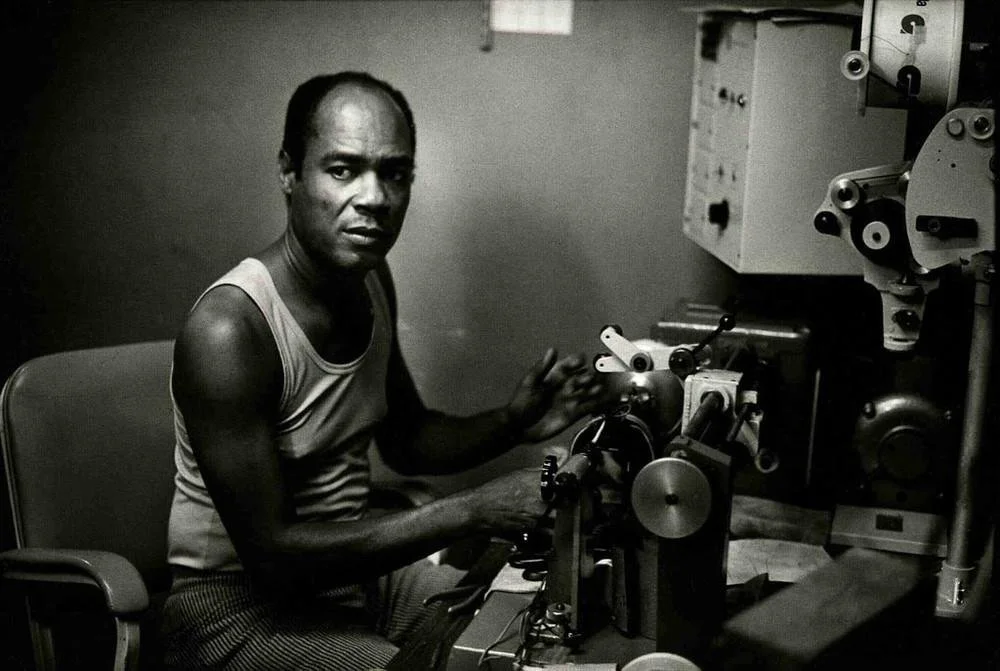
“This is serious business. This is dub.”
Luke: Tell me a little bit more about how you got involved with the sound when you were an early teenager.
Mafiatone: It stems back further.
Our parents respectively knew each other from back in Jamaica, even before we were both born, and he was 12 years my senior.
When my mum came to England and I was born in 1961, Stafford came here a year after I was born, in 1962.
His mum lived at my parents’ house. Back in those days it was like friends saying, “Oh, I’m in England.” You’d go to a relative or a friend, somewhere where there was work and so forth.
So they stayed in our house for quite a number of years. I’ve got no memory of not knowing him.
Luke: And this was around Handsworth, Birmingham?
Mafiatone: Yes, Handsworth.
Stafford was originally from St Catherine, just outside Kingston. He came in 1962 because he finished off his school here, and he started working for a company called Raleigh Bicycles in 1965. That’s how I got my first three-wheeler bike!
So my involvement is from before the sound.
Luke: Got it.
Mafiatone: Where the sound came in, I was in approved schools, and my mum complained to his mum, saying, “Leon’s not behaving himself.”
So Stafford’s mum says to him, “You know, try to keep the lad occupied.”
That’s how I started travelling with the sound. By now I’m talking about 1974–75.
I had an idea what I was getting into because Stafford was already the first person to introduce me to roots music. Before that, you’d listen to blue beat, ska and that sort of thing.
I always fondly remember, when I look back, being in the garden with him in 1974. The sun is shining, just the two of us, and he’s testing the plates from Jamaica.
He’s using his mum’s Morphy Richards record player to test them. He’s run the lead from the kitchen into the garden, and he’s running in and out excitedly, clicking his fingers.
I’m laughing because I’m thinking it’s funny.
But he goes:
“This is a serious business. This is dub.”
At age 24, by 1976, the greatest sound on the planet throughout ’76 was Mafia. He was just on top of the world.
From Sound System to Record Label
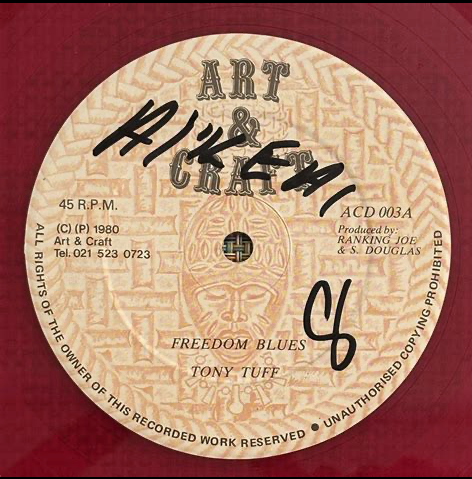
Luke: And Mafiatone would go on to be not just in the sound business, but in the record business too, with the Art & Craft label?
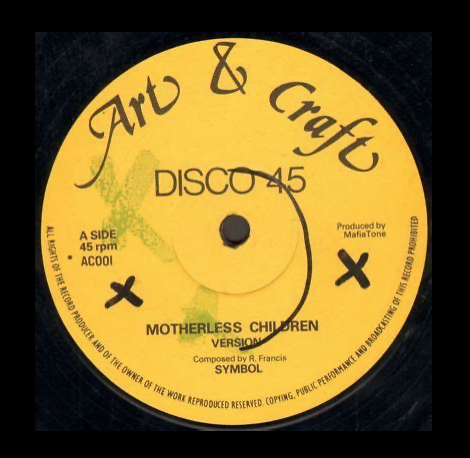
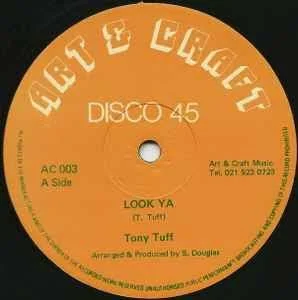
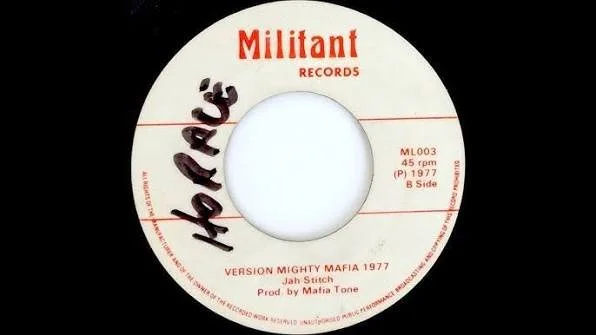
Mafiatone: Mafia founded the Militant label in 1976, experimenting with his hand in production.
Then, three years later, he went on to found Art & Craft. That was in 1979, with a song called Motherless Children by Symbols.
Luke: When did Stafford pass away?
Mafiatone: Stafford passed away in 1992.
Luke: I thought it was a little earlier because the activity of the sound seemed to wane around the early ’80s?
Mafiatone: The last time we played out was Saturday, May the 24th, 1980.
After that, he went into a final phase with another label called Now Generation, which started in 1985.
Luke: So from that point we’re talking more about the dancehall side of things in the ’80s?
Mafiatone: Yes, that’s right. He owned a record shop by that name too, and the Now Generation sound system in the 1980s was a spin-off from that record shop.
Keeping the Sound Alive
Luke: There aren’t really any sound tapes out there of Mafia, are there? Does anything like that exist?
Mafiatone: No.
But if you did have a cassette and you came to listen to me play, I’m sure you’d be blown away at how accurate it is.
“It’s like a time warp.”
Luke: Any further plans for the future? Have you got anything on the boil?
Mafiatone: There’s something coming up on the 17th, which is a birthday celebration for Stafford. His birthday is actually the 18th, but that’s the nearest date they could get, so we’ll spill over at midnight into his birthday.
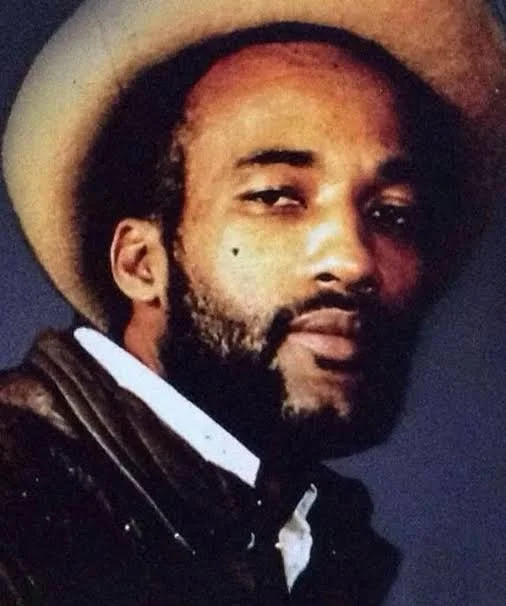
The history of sound system culture is often reconstructed through surviving records, dubplates, flyers, photographs and the handful of dance recordings that escaped the room in which they were originally made. Mafiatone offers something different: a history that has remained physically connected to its source.
The master tapes carried back from Jamaica tell part of that story. They point towards an era when British sounds were not simply importing Jamaican records, but developing direct relationships with producers, engineers and studios — booking sessions, commissioning recordings, cutting exclusive versions and bringing those materials back into dances in Britain.
Stafford Douglas sits within that history as more than a selector or soundman. Through Jah Mafiatone HiFi, his trips to Jamaica, his relationship with studios such as King Tubby’s and Channel One, and later labels including Militant, Art & Craft and Now Generation, his work traces the development of roots and dub culture in Britain from the early 1970s into the dancehall era.
Leon’s memories also reveal the history at a more intimate scale: Stafford testing fresh Jamaican plates on his mother’s Morphy Richards record player in a garden in 1974; a teenager laughing at his excitement; and Stafford stopping to explain the significance of what they were hearing:
“This is a serious business. This is dub.”
Decades later, when Mafiatone plays those tapes again through a sound system, the intention is not simply nostalgia or archival preservation. The music returns to the environment it was made for — played loud, collectively, and through a sound.
In that sense, the archive remains alive.
